Questa pagina non è ancora stata tradotta, perciò è mostrata in inglese.

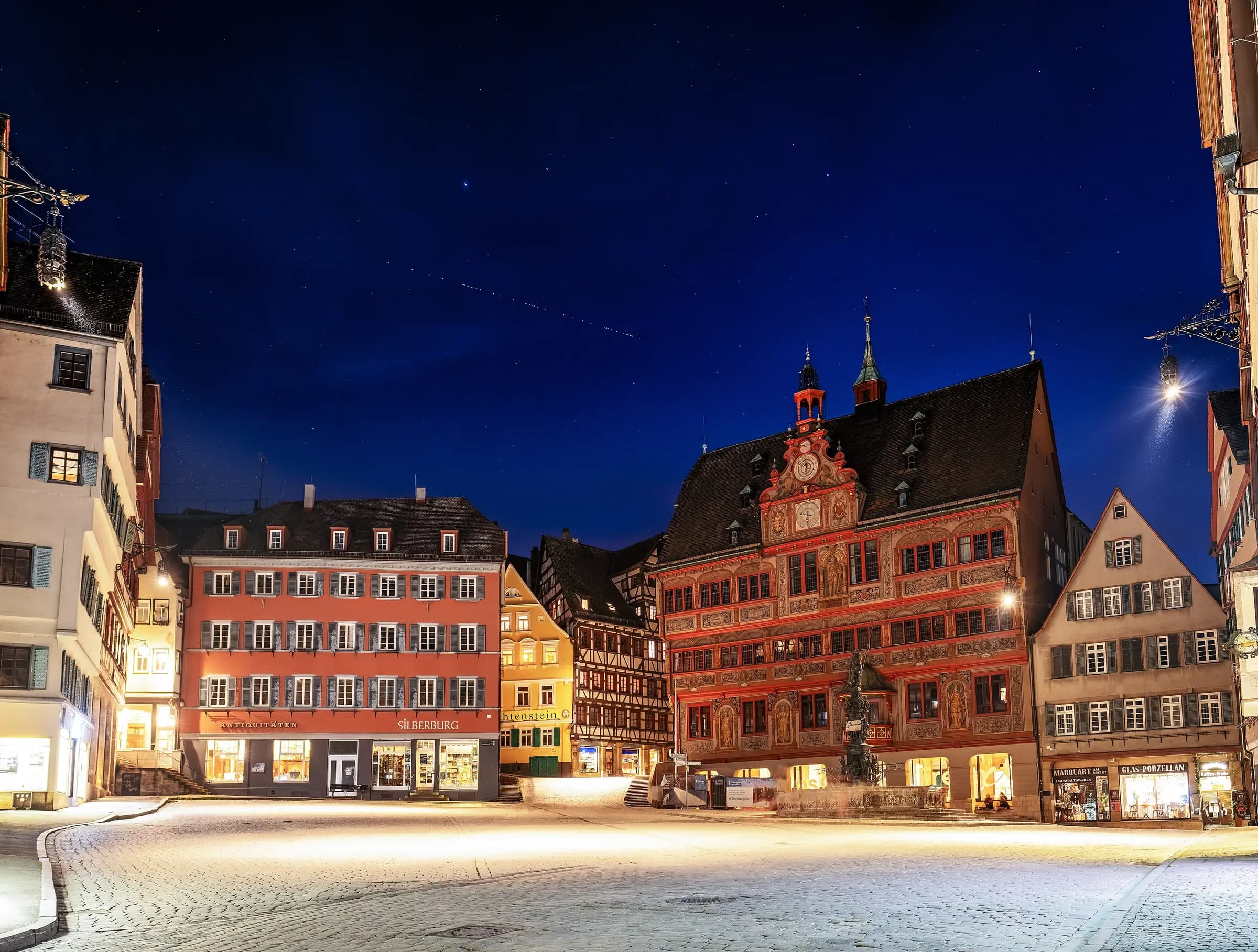
Un treno di satelliti attraversa il cielo notturno sopra un antico municipio e la sua piazza.
A new era

What once needed a centre, no longer does.

For most of history, a few things needed a central authority: keeping records, holding money, doing the work, connecting people, making things, producing energy. One by one they are becoming possible at the scale of a town — or of a group scattered across the world. When those functions no longer need a centre, neither does governance.

01

Records

What changed

Cryptographic signatures and public ledgers let anyone check a record without trusting whoever keeps it.

What it means for governing

A vote, a membership roll or a set of accounts can be verified by every member — not only by a clerk.

The limit

A signature proves who decided. It cannot prove the decision was wise.

02

Money

What changed

Bitcoin and the Lightning network let a group hold and move money without asking a bank.

What it means for governing

A community can keep its treasury in the open and pay directly — through OrangeCat — only as its members decided.

The limit

Taxes and the laws of the place you live still apply. Open money is not a way around them.

03

Work

What changed

AI agents can draft, translate, summarize and check — the clerk's work that used to need an office.

What it means for governing

A small group can run its governance properly without paid staff; Loki's agents and people carry decisions out.

The limit

Agents propose; people decide. Some decisions — who belongs, and the rules themselves — are reserved to people.

04

Connection

What changed

Phones and satellite internet reach almost everywhere — a mountain village, a ship, another continent.

What it means for governing

An assembly no longer needs everyone in one room. Members can take part from wherever they are.

The limit

Being able to vote is not the same as taking part. Good design still has to make participation easy.

05

Making

What changed

3D printing and small-scale manufacturing move some production closer to where people live.

What it means for governing

Communities can make more of what they need locally — and decide together what to make.

The limit

Most things are still made in large factories, and will be for a long time.

06

Energy

What changed

Local solar and batteries are already common. Small modular reactors promise compact nuclear power: two are generating commercial electricity today (in Russia and China); the first Western units are under construction.

What it means for governing

Communities can hold more of their own energy — and will need to govern it together.

The limit

Small reactors are not yet proven at scale or cheap. This is a direction, not an arrival.

Choose your rules

If the functions no longer need a centre, the rules can be chosen by the people who live under them — as easily as joining a club, and as openly as a Landsgemeinde. Consensus or majority, assembly or board, a village or a network spread across continents: Solon provides the infrastructure, not the ideology.

What technology cannot do

  • It cannot grant sovereignty. Recognition is a political fact, earned from people and governments.
  • It does not replace the law of the place you live. Taxes owed are owed.
  • It cannot make a decision wise — only visible, fair to count, and possible to check.
  • It cannot make people take part. Design can make it easier; the rest is up to the group.